Estimated reading time: 9 minutes
Introduction to Tailfin Axles
This guide will cover into all there is to know about Tailfin’s Axles (Thru Axles and QR Axles), and why we think they are the best mounting options for our Pannier Racks, CargoPack and SpeedPack Rear Systems.
Note: This guide references our CargoPack, formerly known as the AeroPack – part of our modular Pannier Rack and Rear Systems range.
What are Thru Axles and Quick Release (QR) Skewers?
One of the distinctive features of a Tailfin Rear System is how we use the wheel’s axle to secure the system to the bike. Whilst, indeed, you can also mount a Tailfin system directly to your frame using our Direct Mount kit or Frame Mount Adaptors to the eyelets, it’s when using the axle that the full strength and security of our design reaches its peak.

QR Axles
Before the 12mm Thru Axle made its way to be the new standard, the most common type of wheel fixing was the quick-release (QR) skewer. This simple system relies on a cam-activated mechanism operated by hand and provides a quick and effective solution for holding wheels in place.
A very simple and reliable design, it helpfully comes in one size and standard fitting hub widths of 130mm and 135mm. So if your bike runs with a QR Axle, you needn’t read on any further, just select the option ‘Axle Mount’ and then ‘QR Skewer‘ when asked to choose a mounting option.
Thru Axles
The widespread use of disc brakes, firstly by mountain bikes and more recently by road and gravel bikes, highlighted some specific failings of the quick release (that of inconsistent clamping forces and poor alignment between hub and frame dropouts resulting in brake alignment issues) when used with this more modern style of braking.
To mitigate this issue, the bike industry developed what we call the Thru Axle(or bolt thru axle). This larger, 12mm in diameter wheel fastener threads securely into the frame itself through high-tolerance circular dropouts and provides much more consistent alignment and clamping forces that minimise frame/fork compression and the resultant annoying brake rub.
The Tailfin 12mm Thru Axle Axle
Why do we recommend axle mounting?
Using the rear wheel’s axle as an attachment point for the Tailfin system was the result of identifying the strongest part of the bicycle in terms of load bearing. Spreading the forces of any additional load to the axle (and subsequently the wheel) isolates them from potentially causing stress on the relatively delicate rear triangle of the bike frame. Additionally, in case of a catastrophic failure, either through overloading or an accident, the axle is a relatively inexpensive item to replace and should not result in writing off your precious frame.
Thru Axle Thread Pitches
Being fuelled by competition, the bike industry is notoriously reluctant to settle on universally accepted standards, and brands are keen to adopt unique and specific designs in order to stand out from the crowd.
The Thru Axle is a victim of this process, and one of the roadblocks we encountered when designing the Tailfin Thru Axle was the multiple thread standards that have been adopted by various manufacturers, as well as the recently introduced ‘UDH’ standard that many modern bikes are spec’d to.
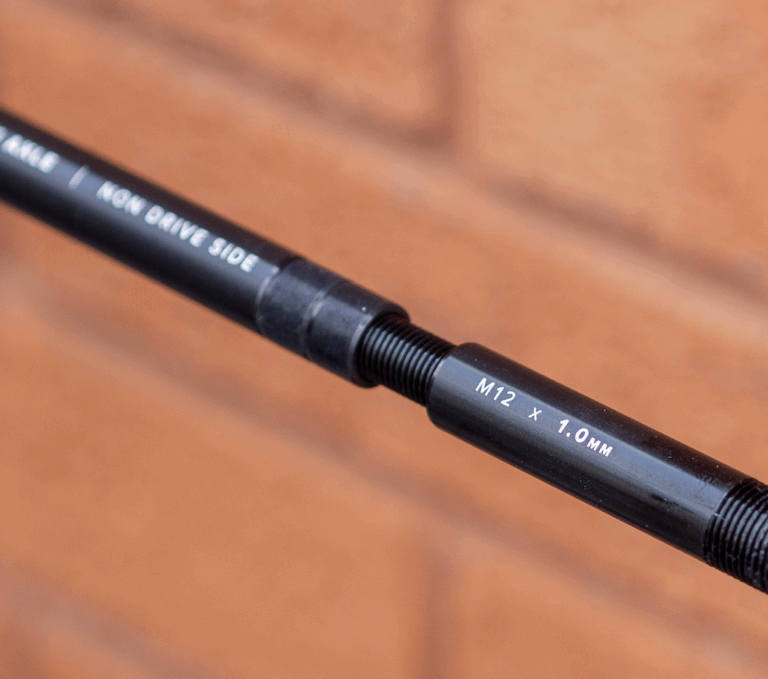
Not only does the thread pitch (the angle and spacing of the raised thread) change between designs, but also how the bike axle fits within the frame itself. This is why the Tailfin 12mm Thru Axle is available in five different thread pitches (1.0mm, 1.25mm, 1.5mm, 1.75mm and Speed Release/Double Lead). The Universal Thru Axle includes the 4 main thread pitch options (excluding the 1.25mm thread option).
How to attach a Tailfin system to the axle
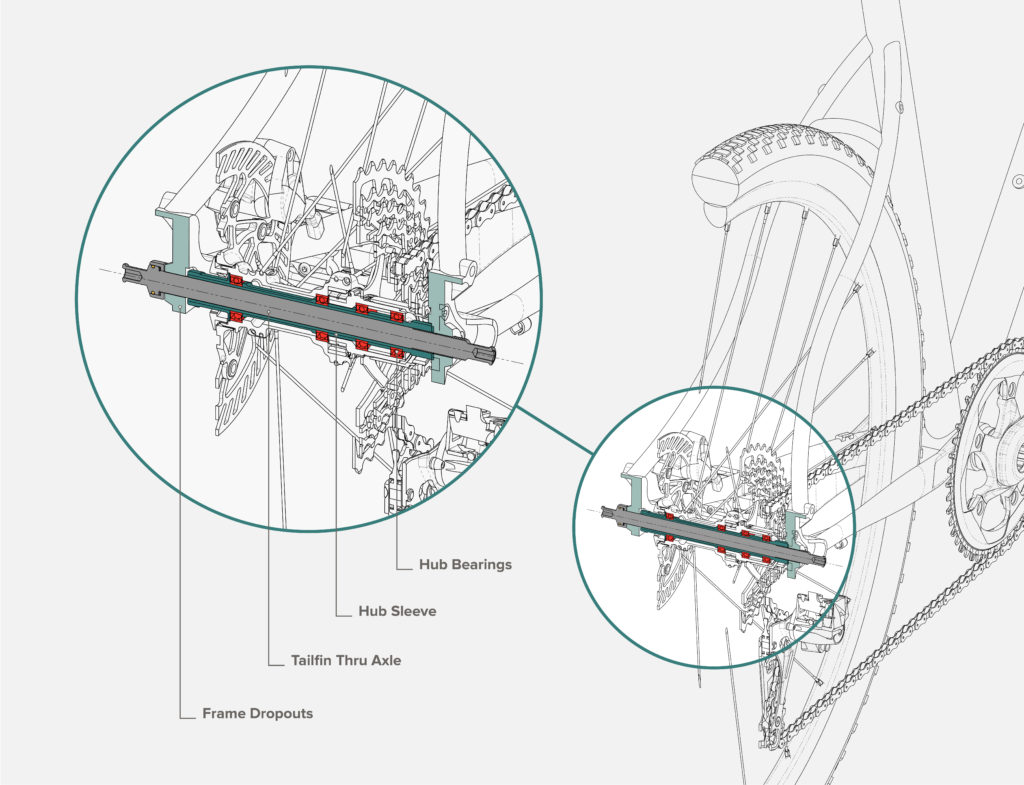
Look at the diagram below, and you will by now notice that the replacement Tailfin axle has a smaller diameter extension at each end of the main axle.
These extensions are designed to stick out further than the existing axle and provide a solid mounting point for each side of the Tailfin Arch, via our Fast Release Dropouts. The length of these extensions has been carefully chosen to ensure there is zero risk of fouling when riding your bike without a Tailfin fitted, meaning the Tailfin axle can be seen as a permanent replacement for your old axle.
You will also notice that the extensions feature machined ribs on the mounting surface. These are designed to prevent the Fast Release Dropouts from sliding about. It’s also why the dropouts feature nitrile bushings that conform to these ribs and create a secure connection without rattle or movement.
Thru Axle materials
Tailfin’s Thru Axles are individually CNC machined from solid stock 7075-T6 aluminium alloy and further processed with an anodised finish in classic Tailfin Black. 7075-T6 alloy was chosen as it has the ideal attributes for this application: high strength-to-weight ratio, resistance to fatigue and corrosion, plus excellent overall toughness. The fact that it was originally developed for aircraft space frame construction should tell you all you need to know.
On average, a Tailfin Thru Axle with additional hardware weighs 69 grams – standard bolt-thru axles weigh between 45-75 grams – so the trade-off is very minimal.

Axle Fitting and compatibility
How to fasten the Tailfin Thru Axle in the frame
Due to the unique shaping of the Tailfin Thru Axle, it is very difficult to incorporate any form of lever or handle into the design and still retain simplicity and low weight. Instead, the ends of the Tailfin bike axle are machined to accept a standard 5mm Hex or Allen-style tool, which is common on most multitools. The 5mm recesses are machined deep enough to provide a very positive fit with all tools to reduce the chances of slipping and potential rounding off of the axle end, which can happen with some axles.
While we will always recommend you tighten the Tailfin axle ‘hand tight’ in your frame (using a 5mm hex key, of course), individual bike frame manufacturers will recommend differing specific torque settings. If in doubt, refer to your friendly local bike shop for guidance on how tight an axle should feel in your frame – you shouldn’t need two people and a huge metal bar to undo the axle, but equally, the Tailfin axle shouldn’t be able to be loosened just by hand.
We have Assembly Guides for the 12mm Thru Axle and the Universal Thru Axle for guidance, and installation video guides for both, too.
How do different hub widths impact the Thru Axle alignment?
Key considerations were covering different thread pitches, axle seat shapes, and frame spacing/widths.
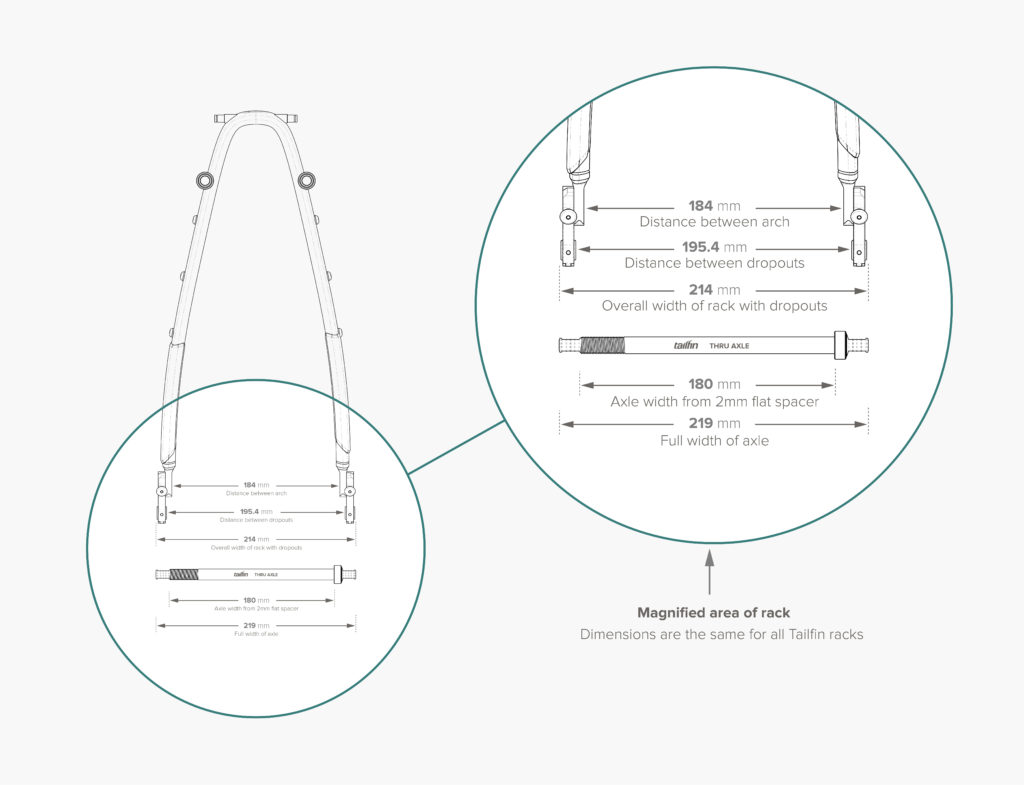
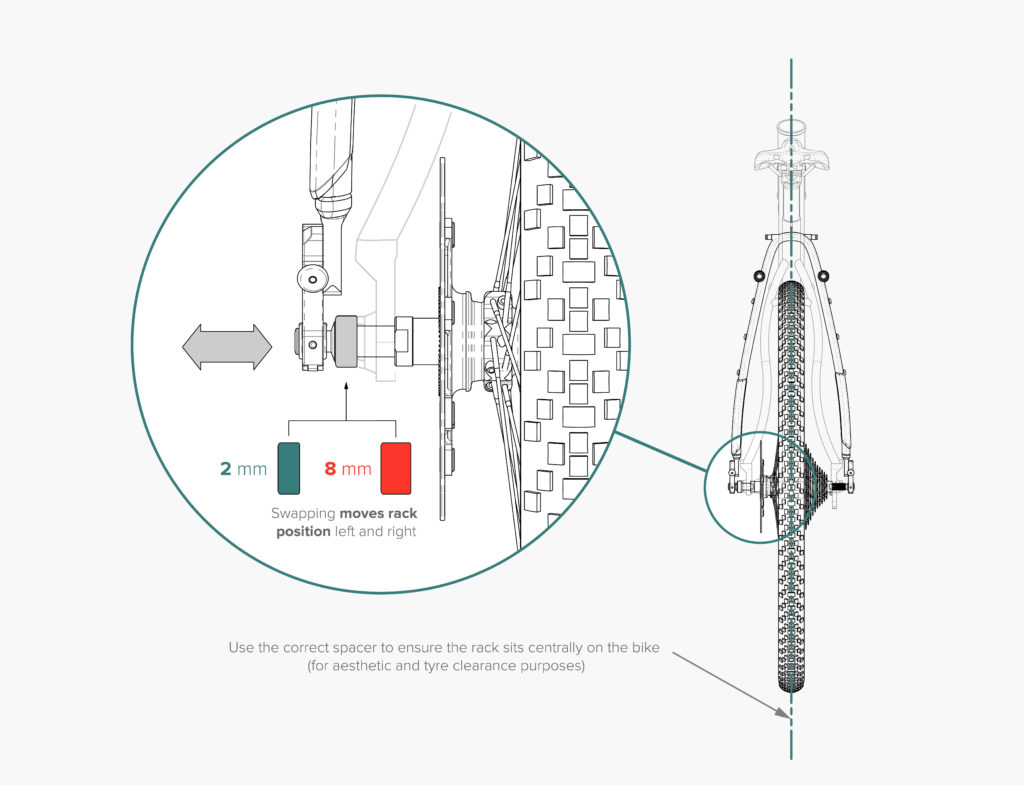
Each version of the Tailfin Axle ships with four different axle seat spacers: 9mm Flat, 6mm Flat, 3mm Flat and 6mm Cone. These are primarily to make sure the axle sits flush with the frame and creates a solid interface for a strong and reliable connection. The secondary reason for providing the different heights of the spacer is so you can maintain an equal amount of axle showing at each side of the bike. This helps centre the Tailfin system on the bike and prevents uneven loading. You can stack spacers on their flat sides to achieve the best alignment.
Offering spacers of different widths also allows us to produce a single length of the axle that will easily fit the majority of common rear hub/frame spacing. The axle will fit most 135, 142, and 148mm spaced rear ends. At the moment, we cannot accommodate the rarer 157, 177 or 197mm rear hub spacings. If this is your bike, we recommend frame mounting if you want to run a Tailfin Rear System.
For bikes with 148mm hubs, titanium frames, or using the SRAM T-Type Transmission Derailleur Hangers, you should choose the Universal Thru Axle by default. This is because the Universal Thru Axle includes two 8mm central extenders to make the axle longer to accommodate these wider hubs, frame features and derailleur hangers.

Additional considerations
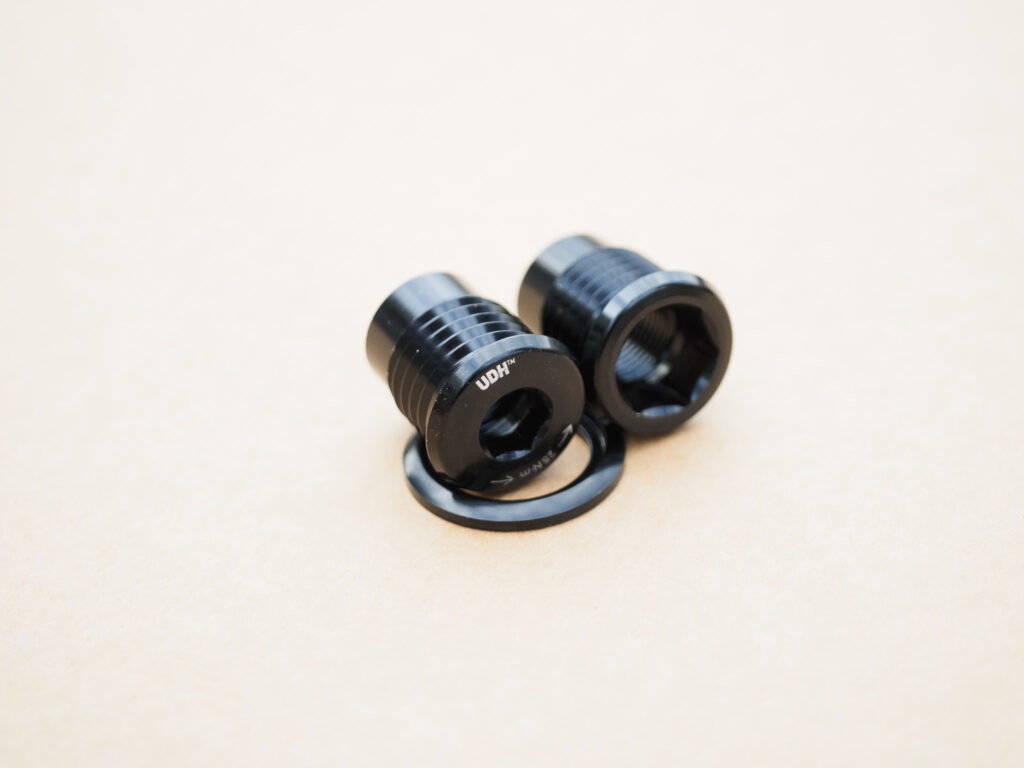
In some instances, specific bike brands also adopt additional proprietary features within the rear Thru Axle design, which has led us to provide a variety of additional adapters to ensure further compatibility. We produce an adapter for brands that have adopted SRAM’s UDH (Universal Derailleur Hanger) or T-Type Transmission systems. Other brands, such as Focus and Cervelo, have adopted a keyed R.A.T. axle system requiring additional parts, and Salsa and OPEN also have further requirements in the form of replacement nuts or additional locking nuts.
How to Select Your Axle (Video)
Watch the Video Guide:
Tailfin’s Axle Finder Tool
We have gathered an extensive database of bike brands, models, and years – placing them into an easy-to-use Axle Finder, enabling riders to take the uncertainty out of getting the right Thru Axle and adaptors (if required).
Printable Templates
Additional support
If you’d like more advice or require additional support, please contact our Customer Service team.