Estimated reading time: 7 minutes
Note: This guide references our AeroPack, now available as the CargoPack system
We’re often asked by customers; “how can I fit your products to my full-suspension (full-sus) bike?”. It might be that you’ve signed up for a challenging off-road ultra event like the HT550. Perhaps, though, you just want to add more versatility to your full-suspension bike. So which Tailfin products do we recommend for your off-road adventures?
Which Tailfin Rear System Is Best To Use With My Full-Suspension Bike?
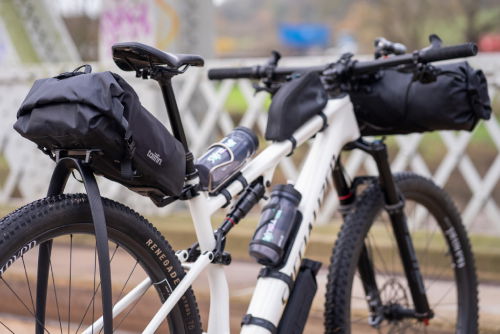
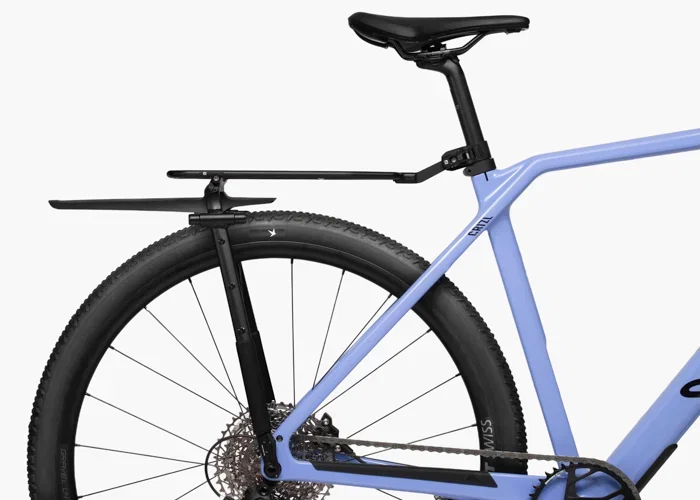
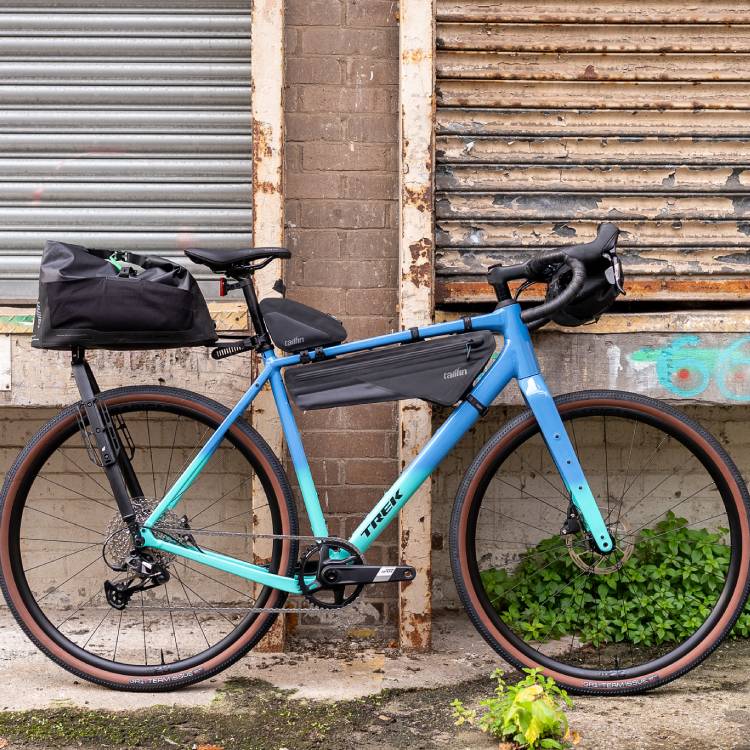
We recommend our Fixed Carbon or Alloy CargoPack (18L) or SpeedPack (10L) for full-suspension bikes, rather than a Carbon Rack setup. The Fixed Carbon CargoPack or SpeedPack System is stronger than the Carbon Pannier Rack off-road. The Fixed systems are also lighter than the removable ones, as there are fewer components.
Our alloy Journey Pannier Rack is also compatible with full-suspension MTBs, and is our only Pannier Rack system with a removable Rack Top Bag that is suitable for off-road use.
The connector parts used on our Rear Systems have small bushings to allow each part to pivot and work with your rear suspension system.
See our Complete Guide to Rear Systems for a more in-depth look at our Rear Systems.
Watch below how the Journey Pannier Rack moves with a full-suspension MTB
How does it ride?
Back in 2019, Nick (Tailfin Founder and Head of Engineering) wrote a summary for Bikepacking.com to describe how a full-sus bike rides with an original Tailfin AeroPack fitted:
“We genuinely believe “the best bike packing bike is the bike you already own”, therefore it was important that the AeroPack could be used with full suspension bikes. Using a unique tri-pivot design, each pivot contains replaceable plain bushings which allow it to adjust position as the suspension compresses.
Carrying any gear behind the seatpost of a full-suspension bike is challenging. With regular fabric seat packs, there are three issues. Firstly they impede dropper post use. Secondly, they must be kept small (sub- 7 litres) in order to avoid the rear wheel driving into the bottom of the pack. And thirdly, they are often in the way of your backside when making steep descents.
The AeroPack does a fair job to resolve those issues, however, it is still not without its compromises. Due to the weight of your gear sitting directly on the wheel, it changes the unsprung mass of the wheel (similar to URT suspension system in the 90s), which will therefore change the suspension dynamics and create more chatter on rowdy trails.
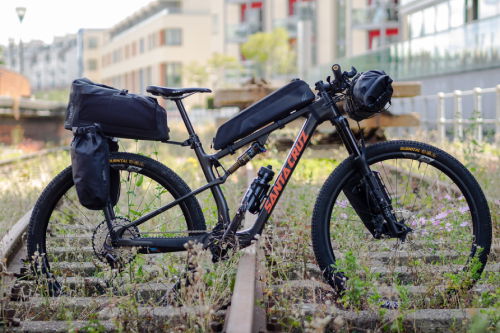
The majority of our in-house testing has been done with a Santa Cruz Bronson, which has 150mm rear travel. The results were generally positive with the positives outweighing the negatives.”
The original 18L AeroPack has since evolved to become the 18L CargoPack – our most popular Top Bag to date.
What about dropper posts?
The Gen 2 (Jan 2026+) CargoPack comes with a long Seatpost Connector as standard, but on Gen 1 bags, the Extended Connector is also available on our site. This part will position the bag further back and allow you to make better use of the dropper.
To find if you have a Gen 1 or Gen 2 bag, see our guide.
We also recommend packing smaller/softer items at the front of the bag, and larger items at the back to make the most of the space you have available and avoid interference with your dropper. It’s a good idea to open the side pocket or air valve (CargoPack) before rolling the bag shut, as this will help expel any air and allow you to compress the bag to a smaller size, too – again, this helps when using a dropper post.
If you’re even more restricted for space, our smaller SpeedPack has been designed not only for riders who wish to carry less, but also for smaller bikes, and/or bikes with less saddle clearance.
The Fixed SpeedPack offers 3 lengths of fit link connectors (30, 60 and 90mm) to allow maximum adjustability of the system with your bike, even when fitted to a dropper post.
What are the limitations?
There are a few things to be aware of when looking to fit a CargoPack or SpeedPack to a full-suspension bike. Firstly, max tyre clearance is as follows: 29er = 2.9″ tyre / 27.5 = 3.5″ tyre. Wider tyres are likely to clog with mud or even rub the rear arch. The Journey Rack is slightly different due to the lower arch profile and fits 29” X 2.6” (700C x 66mm) with standard/boost dropouts.
Secondly, our rear axles can fit up to a 148mm rear hub (common on most MTBs and known as ‘Boost’). For full-suspension bikes, we would recommend selecting our Universal Thru Axle when configuring an order. This axle includes a 16mm extension that lengthens the axle and is often required on these frames, which feature thick chain stays and seat stays. Some bikes use an even wider rear hub (157mm, aka ‘Super Boost’), but these are currently incompatible with our axle system.
Finally, the maximum carrying capacity should be reduced by approximately 50% when riding off-road. This is because dynamic weight, the forces generated by movement over rough terrain, places significantly more strain on the system than static weight. Factors such as terrain severity, tyre pressures, and shock setup all influence how these forces behave.
Additional products
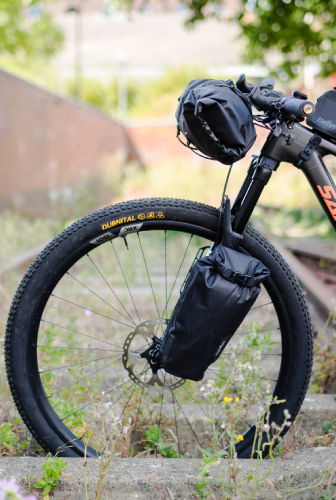
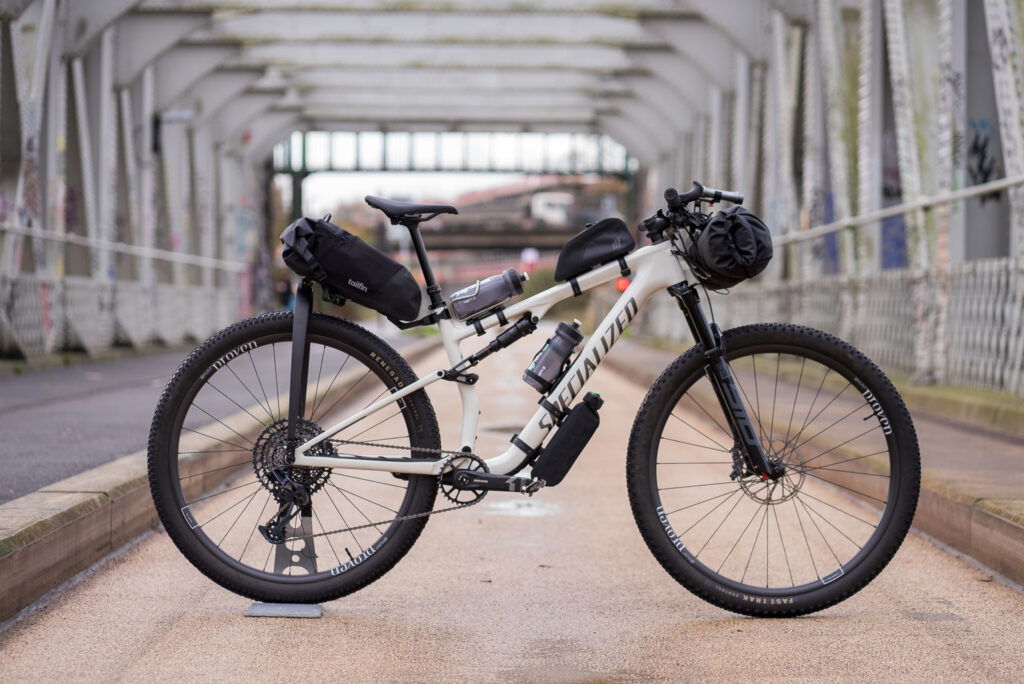
The CargoPack and SpeedPacks are not the only way to carry extra kit with you on your bike. Our Suspension Fork Mounts (SFMs) transform a suspension fork into a bikepacking rig by allowing riders to securely carry additional kit upfront. Pairing these with our Fork Packs and Cargo Cages allow a full-suspension bike to carry up to 20L (when using 2 x 10L Fork Packs) of additional storage – extra capacity for the longest adventures.
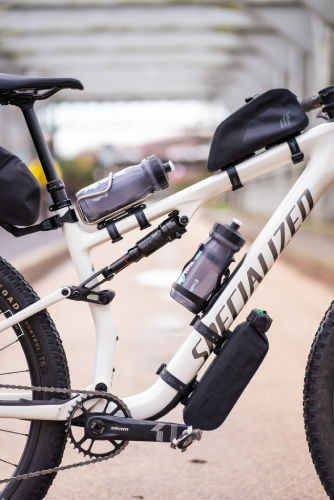
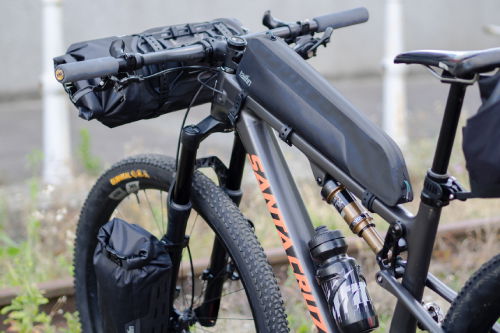
Smaller packs and accessories are available, too. The 3L Downtube Pack is perfect for stowing tools on full-suspension frames that are often lacking in mounting points – a fit-and-forget pack that you can leave attached all the time. The HydroMount also allows you to strap bottles and mini cages to your frame, great if you’re limited on frame space for water.
For phones, food and first-aid, the Top Tube Packs are available in many shapes and size options and strap securely in place with our patented V-Mount system.
Don’t forget, the extra weight carried on the bike will affect your suspension, so adjust the sag accordingly. A good idea is to go for a test ride first on a familiar trail with your new setup and adjust shock pressure, rebound, and compression settings (if available) to suit.