Estimated reading time: 7 minutes
You’ve decided to go with a Tailfin Rear System. But how do you decide between Carbon and Alloy?
This guide is intended to help you decide on the right material for your Tailfin system. As with any choice such as this, there is no definitive ‘right’ answer, as every rider will have different priorities. Some important factors to consider are: cost, weight, aesthetics (the look of the part) and your intended riding style.
Alloy vs. Carbon: The Materials Explained
What Materials Does Tailfin Use For Its Rear Systems?
We use Toray T700 carbon fibre for our carbon arches and top stays and 6061-T6 alloy for our alloy arches and top stays. The carbon parts are produced by our manufacturing partner in Taiwan (a country renowned for its expertise in carbon fibre bike component manufacturing), and our alloy racks are produced in China. This is due to the manufacturing processes being very different between these two materials.
How Are Our Alloy Parts Made?
In comparison, our alloy arches are relatively straightforward to produce, with many stages of the process being automated, requiring far less manual input. Lengths of alloy tubing are extruded and cut to size (imagine pushing modelling clay through a hole and then cutting it to size). From here, the tubing is bent into shape, and the relevant connector pieces are welded in place. Compared with our carbon arches, this is a far simpler component to produce, and thus is more economical in cost.
How Are Our Carbon Parts Made?
Carbon fibre production is known, to most people, as a cutting-edge technology, but in reality, creating carbon fibre parts is a surprisingly manual, almost artisan-like process. It requires a high level of knowledge and expertise to transform loose carbon fibres or woven sheets of carbon fibres into a bicycle rack capable of circumnavigating the US or competing in an ultra-endurance race such as the Silk Road Mountain Race.
Many complex steps are involved in producing a carbon arch or top stay. Breaking the process down simply, sheets of resin-coated carbon fibre are placed in a mould and baked in an autoclave. The autoclave acts like an oven and cures the resin, after which the arch is removed and ready for the final finishing touches.
In reality, the placement and orientation of the fibres (and sheets) will change depending on which part of the arch or top stay is being created. This allows the part to be strong and stiff where it needs to be and minimises the amount of material required, cutting unwanted weight. Multiple layers are built up by hand, and it takes skill to lay the sheets perfectly, avoiding any unnecessary overlaps or weak spots. Our arches also require additional parts to be bonded and incorporated into this process, adding to the complexity.
Thanks to this complex, labour-intensive process, the cost of producing our carbon fibre parts is significantly higher than that of alloy parts.
Alloy vs. Carbon: The Key Considerations
Is Carbon or Alloy More Durable?
Durability is a very real consideration for all riders, especially if you are planning to go off-road or going on a long trip. A commonly held opinion is that a carbon fibre product is not as durable as a metal equivalent, and whilst in some instances this can be the case, the reality is that real-world durability is comparable between our Carbon parts and their Alloy equivalents.
We predominantly use Toray T700 carbon fibre (‘higher grade’ T800 and above carbon fibres are more brittle and not able to take a knock). Our priority is to have something strong, stiff and importantly, tough. We also use a mix of UD (unidirectional) with 3K Twill/Weave in high-stress areas like the sidebar and top pivots. The 3K weave also creates the characteristic final finish.
When developing our arches, we conducted extensive testing to ensure they could be used on and off-road. Our protocols were as follows:
Static Test – We loaded up 3x times the max weight on the arch (e.g 81kg). To pass the test, the arch must not break.
Dynamic Test – To pass, the arch must survive 100,000 cycles with the recommended max weight (27kg) or 32/22kg for the Journey Rack on our vibrating test rig.
Both Carbon and Alloy arches passed these tests without issue.
Do You Ride On or Off-Road?
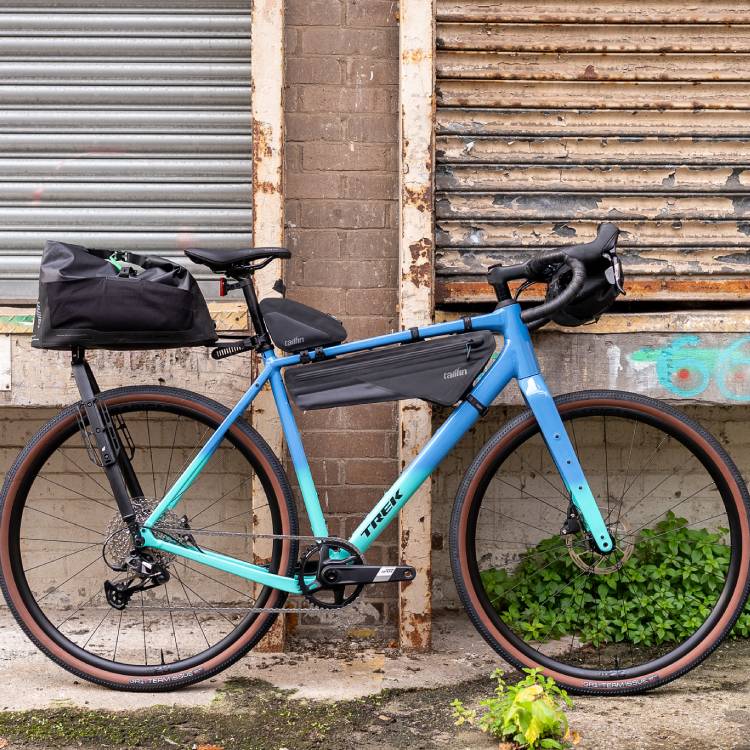
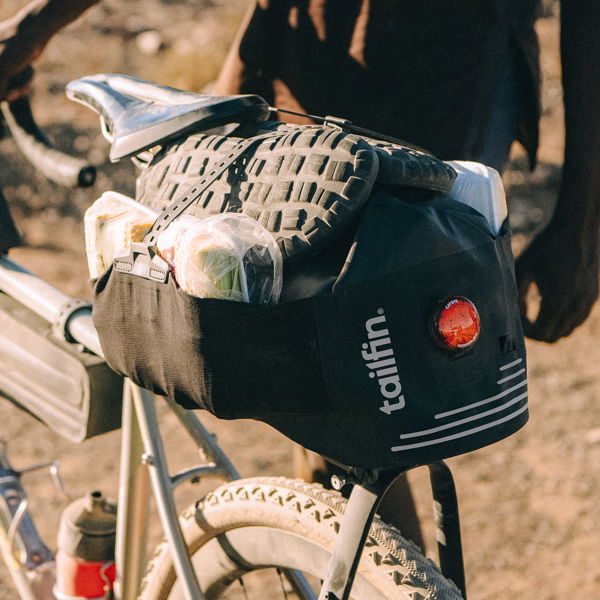
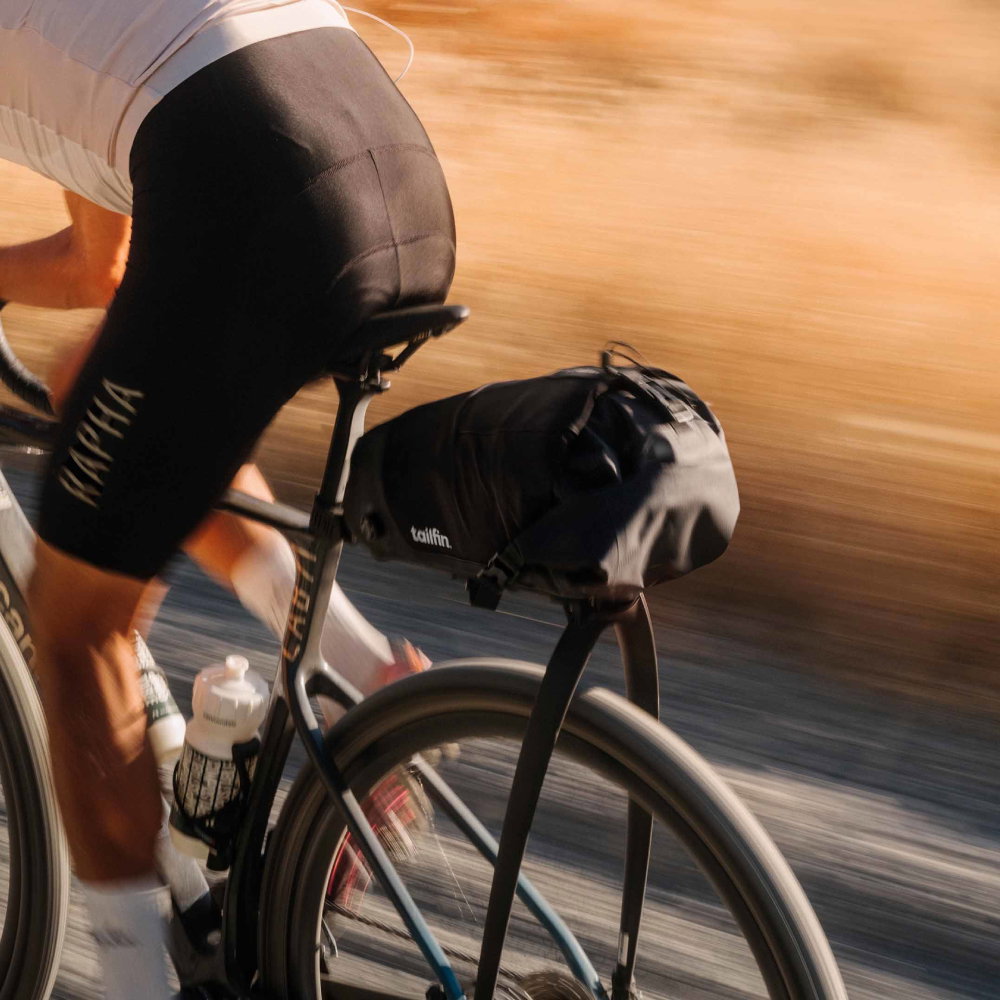
One final consideration is where you plan to ride. If you’re heading off-road, away from civilisation for a long time, then we’d recommend our alloy options. Why? In worst-case scenarios (dropping or crashing your bike), an alloy arch can withstand abuse a little better and can possibly be repaired or ridden when damaged – it will tend to bend. Does this mean that our arches are indestructible? No, unfortunately not. Crashes and damage do occur, and with every component on your bike, there are limits. For this reason, we offer a Crash Replacement Discount for you to replace your damaged/broken kit if needed. Failures due to manufacturing defects are covered by warranty.
One other advantage of alloy is the additional bosses on the legs of the arches and the extra capabilities these add. The alloy arches have either 3 or 4 bosses, depending on the one you choose. It is possible to add extra Cargo Cages or bottle cages to the arch – essential if you need to carry a few extra items, or don’t know when you’ll be replenishing your water and food supplies next. We don’t recommend mounting our Large Cargo Cage to the arches with only 3 bosses, as this can put strain on the cage.
Why Would You Choose Carbon Over Alloy?
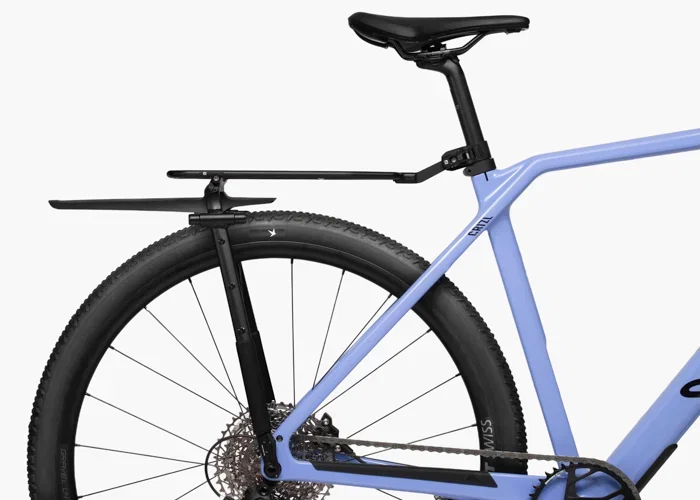
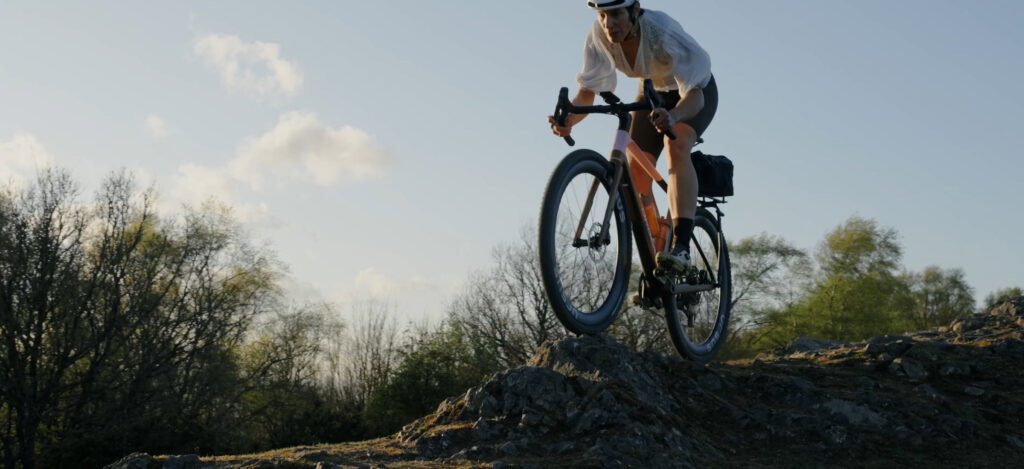
So if carbon fibre is more expensive, why would you choose it? A couple of reasons: aesthetics and weight. As mentioned above, the carbon arches are produced in moulds, and as such, it’s possible to create shapes that just aren’t possible with a metal equivalent. A great example of this ability to shape carbon is the modern-day time trial bike. Almost all, regardless of brand, are produced in carbon fibre – to create the same aerodynamic frames in metal would be wholly impractical (and very heavy!). In the same way we are able to create a more delicate looking carbon arch complete with complicated shaping that just looks right on a modern bike and lightyears ahead of the looks and weight of traditional bike racks that have come before.
Carbon fibre also has a higher strength-to-weight ratio than alloy. This is a key reason why the aerospace industry utilises carbon fibre composites throughout an aircraft, where parts must be strong yet lightweight. Carbon fibre offers exceptional strength-to-weight, meaning a lighter arch that is still capable of carrying the same load as our Alloy arches. If weight saving is a priority for you, then carbon fibre is the way to go. For example, our Carbon Arch without Pannier Mounts tips the scales at just 163g, compared to 370g for the Alloy equivalent.
Alloy vs. Carbon: Additional Considerations
Modularity
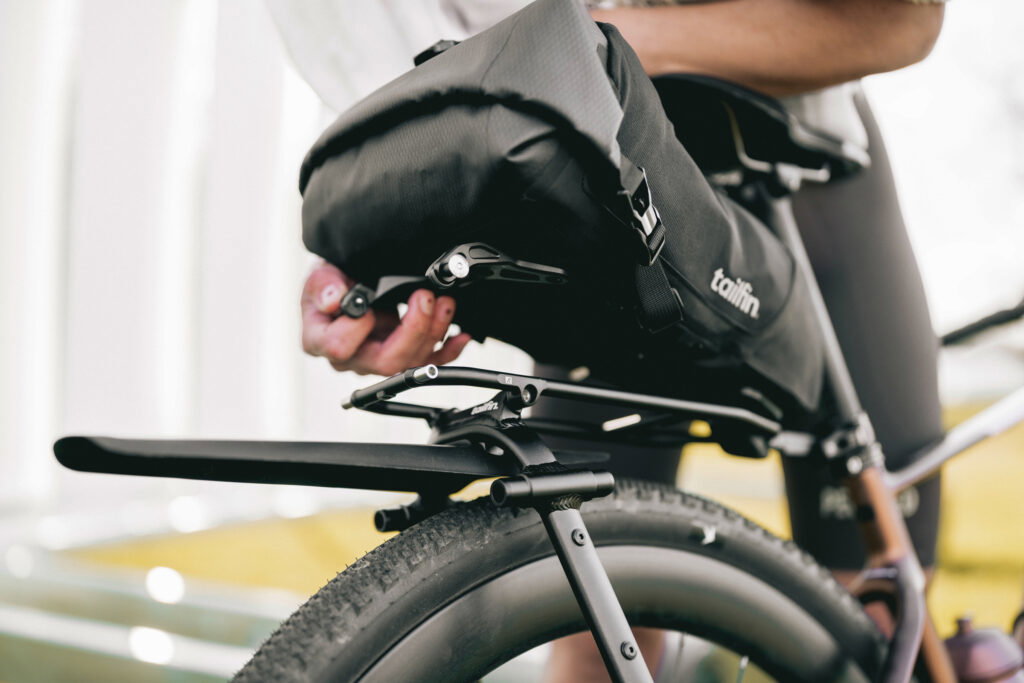
Lastly, it’s worth emphasising that your decision between carbon or alloy needn’t be final. A unique feature of Tailfin products is modularity. Components have been designed to be replaceable and can be swapped over. So if you purchase an alloy CargoPack with panniers for your off-road trips and then want to save weight for an upcoming ultra-distance road race, it’s possible to purchase a lighter carbon arch without pannier mounts on its own, and swap these over in a matter of minutes, ready for the start line. You can also find individual/spare parts on our Spares Page.
Find out more about the entire Tailfin Pannier Rack, CargoPack and SpeedPack Rear Systems on our Product Guides.