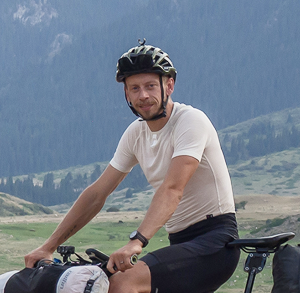
James Hayden has raced across Europe, through Kyrgyzstan, over the Atlas Mountains, and deep into the Pyrenees. In this series, he shares what years of ultra-distance racing have actually taught him – the honest stuff, not the highlight reel.

Something will go wrong. That’s not pessimism – it’s just the nature of racing across continents for days on end. If nothing goes wrong, you probably win. And honestly? I find those races a bit boring. But that’s a story for another day.
The more interesting question is: what do you do when things start falling apart?
Younger James had a very clear answer to this: charge straight at the problem, full speed, no thinking, maximum action. I am, by nature, deeply impulsive. It took me an embarrassingly long time to recognise this as a flaw – and longer still to do anything about it.
What I eventually landed on is a three-part process. It’s not complicated, but it’s changed how I race.
Step One: Solve Problems Before They Happen
The most effective problem-solving happens before the race starts. That sounds obvious. It’s surprisingly easy to ignore.
Most riders spend their pre-race time adding training sessions. I spend a chunk of mine doing something less exciting but arguably more valuable: building a risk matrix.
For every event, I write down every problem I can think of – mechanical, physical, navigational, weather-related – and for each one I note: how likely is it to happen? How bad would it be if it did? What can I do to reduce the chance of it happening? And if it happens anyway, what’s my plan?
This isn’t just a theoretical exercise. It changes real decisions.
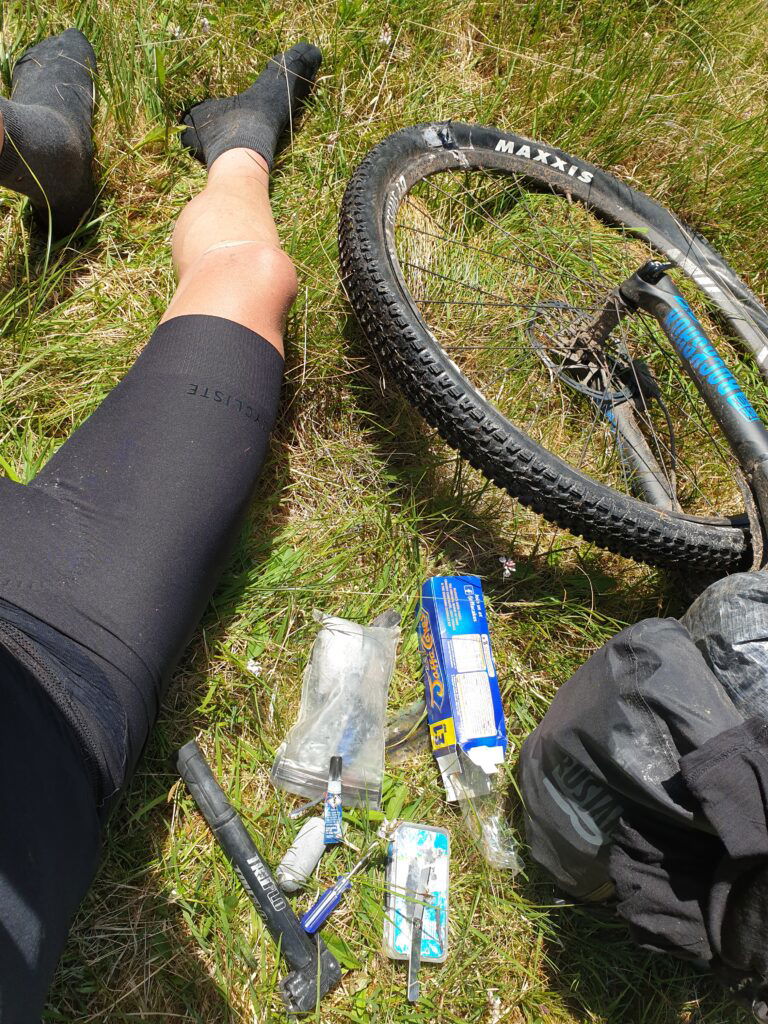
At the Highland Trail 550, I ran wheels built to a specification that Enduro World Series racers use – overbuilt by most bikepacking standards. Mid-race, I broke two spokes. On a standard wheel, that’s a problem that stops you. On those wheels, I just kept riding. The wheel stayed true enough for the remaining 300km without any intervention. I never had to solve that problem in the field because I’d already solved it at home.
The risk matrix is a living document. It gets updated after every race – which brings me to step three, but we’ll get there.
| Probelm | Risk of happening | Consequence | Mitigation | Action |
| Falling into water and getting soaking wet. | 5/10 Might happen. Easy to slip when crossing river. | 9/10 Water is very cold in Scotland – possible hypothermia. | Take care and time when crossing river. Consider unloading bike. Don’t cross river in dark. Bring spare set of clothes in dry bag to change into. Consider bringing stove to use for warming up. | If fall into water and full wet. Get out of water ASAP. If shelter close then get out wind. Strip wet clothes off and get dry as possible. As quickly, but with calm, get changed into dry clothes. If cold consider doing physical activity to warm. If very cold get srove out and make hot water. |
Step Two: Act Rather Than React
Here’s the mantra I repeat to myself whenever something goes wrong mid-race:
Act, don’t react.
Reacting is what the impulsive brain does. It jumps straight into doing – grabbing tools, making decisions, burning energy – without fully understanding what’s actually happening. Sometimes brute force is what’s needed. But even in serious situations, a few seconds of clear thinking usually leads to a better outcome than ten minutes of panicked doing.
Acting means pausing. Taking a breath. Looking at the situation with some openness before deciding what to do. It means asking: what are my actual options here? What happens if I do X? What happens if I do Y?
I use a slightly unlikely example when I explain this: imagine you’re outside a pub on a Friday night and a stranger punches you in the face. The reactor hits back, immediately, without thought. The person who acts takes a breath, clocks the situation – how many people are around? What are the likely outcomes of each option? – and then decides. One response is automatic. The other is considered.
The same principle applies at 3am on a mountain pass when your derailleur starts making a noise you’ve never heard before.
Step Three: Learn the Lesson (Actually Learn It)
I’m pretty forgiving of myself when I make a mistake for the first time. First time – fine, that’s how you learn. Fifth time? I’m genuinely unhappy with myself. There’s no excuse for making the same mistake repeatedly.
After every race, I do a post-race analysis. Not just a debrief in my head on the flight home – a proper written-down, honest assessment of what happened and why. It’s uncomfortable. Most people avoid it for exactly that reason. But it’s where the real improvement comes from.
The other thing worth remembering: you don’t have to make every mistake yourself. The internet is full of race reports, forum threads, and honest write-ups from people who’ve already made the mistakes you’re about to make. Reading them is free. Not reading them and then making the same mistakes is expensive — in time, energy, and sometimes in race finishes.
Learning other people’s lessons is part of preparation. Which brings it full circle back to step one.
The Short Version
Prepare properly and you’ll solve most problems before they start. When something does go wrong, breathe before you act. And when it’s over, be honest about what happened so it doesn’t happen again.
It’s not a complicated system. But it took me a few hard races to actually follow it.
Keen to learn more from James Hayden? Find out more about his ultra-endurance race mentoring.